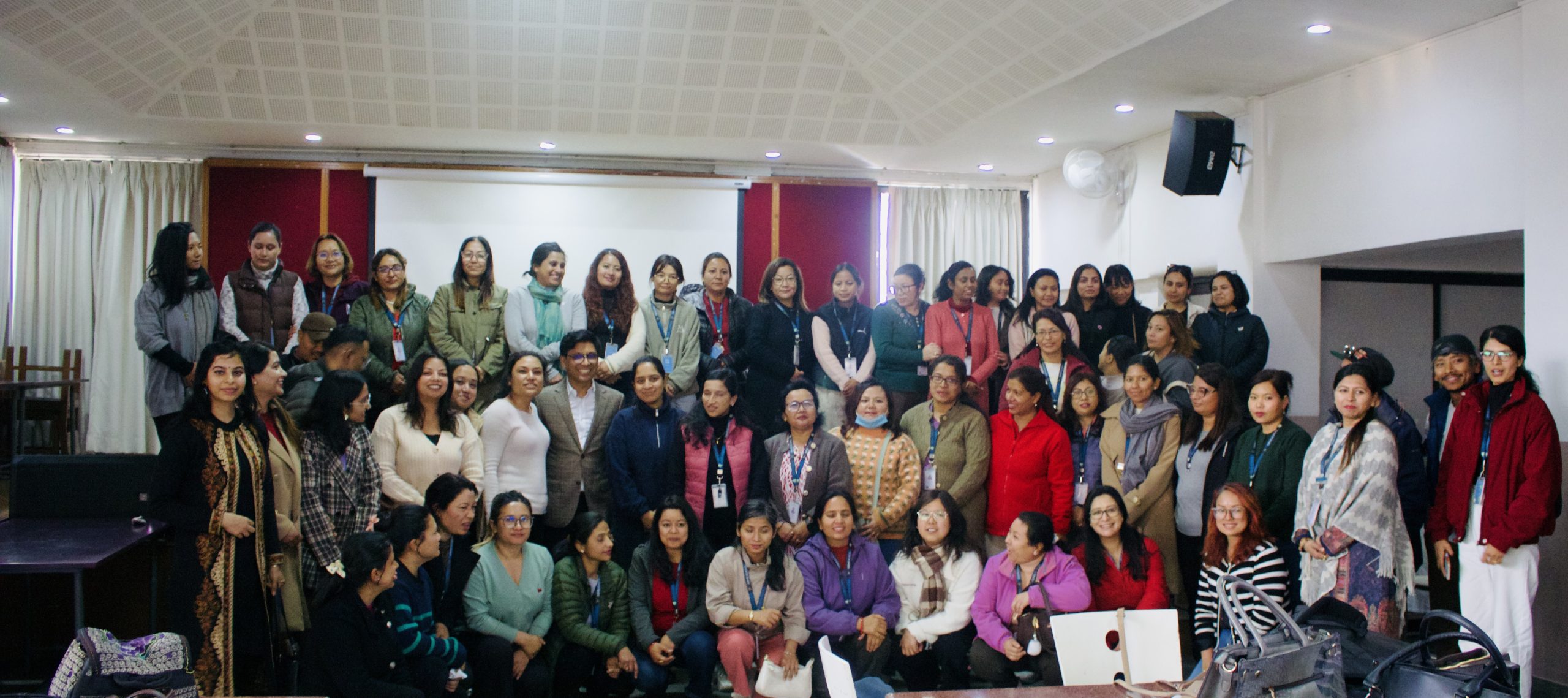
On February 22, 2026, Inclusive Education Nepal (IEN) conducted a full-day Safeguarding & Child Protection Training at Gems School, Dhapakhel, Lalitpur, bringing together 50 participants including teachers, administrative staff, and board members. Guided by Universal Design for Learning and an inclusive safeguarding lens, IEN framed child protection not as a compliance exercise but as the ethical foundation of educational justice. The training opened by contextualizing the urgency of the issue — globally, 246 million children experience school-based violence, and in Nepal, 8 in 10 children face violent disputes, grounding the work in both national law and international child rights frameworks.
The workshop took a deeply participatory approach, engaging participants in vulnerability mapping across four lenses: who is at risk, what risks exist, when they occur, and where. Group findings revealed that marginalized students — including those with disabilities, introverted learners, and children from low-income backgrounds — face risks ranging from bullying and body shaming to sexual abuse and neglect, most commonly in transitional and unsupervised spaces such as washrooms, buses, and breaks between classes. The central framework introduced was the 5R Model (Recognize, Record, Report, Respond, and Refer) which gave staff a clear, actionable protocol for handling disclosures. Equally transformative was the session on effective listening, which challenged harmful response habits like advising, investigating, or sympathizing, and instead taught participants to be fully present, validate emotions, and offer choices rather than solutions.
The training concluded with a forward-looking discussion on making school systems more inclusive and child-friendly, with concrete recommendations including installing accessible complaint boxes, simplifying reporting forms, and embedding the 5R framework into daily practice. Case study discussions reinforced that safeguarding responses must be empathetic, structured, and child-led. Participants left with a clear recognition that their existing school systems fall short of established safeguarding standards, and with both the tools and motivation to begin closing that gap