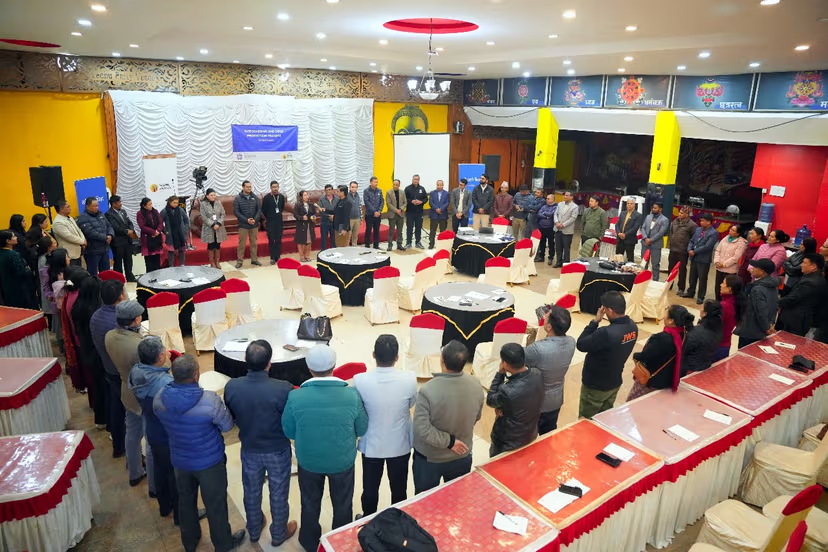
On 12 December 2015, Inclusive Education Nepal, together with Private and Boarding Schools’ Organization Nepal (PABSON), organized a comprehensive training on safeguarding and child protection in Bhaktapur, bringing together 62 school principals, vice-principals, and school leaders from 60 schools.
The program was jointly organized by PABSON Bhaktapur and Inclusive Education Nepal, to strengthen school leadership to ensure safe, protective, and inclusive learning environments for all children.
The training covered a wide range of critical issues related to child protection and safeguarding in the Nepali context. Key areas included foundational concepts of safeguarding, national legal and policy provisions, schools’ duty of care, existing child protection mechanisms, and an honest assessment of the current state of implementation in schools. Participants also discussed common risks within school settings and practical ways to prevent harm through clear systems, policies, and leadership accountability.
Speaking during the program, Ram Tiwari of Inclusive Education Nepal emphasized that safeguarding must be understood as a core leadership responsibility rather than an optional add-on.
“Safeguarding is not just about responding when harm happens. It is about building systems, cultures, and daily practices that prevent harm in the first place,” he said.
Tiwari highlighted the gap between strong legal provisions and weak implementation, noting that schools play a decisive role in closing this gap.
“Nepal has progressive laws and policies on child protection, but children remain vulnerable when schools do not translate these commitments into clear practices, reporting mechanisms, and a culture of care,” he added.
The session encouraged school leaders to reflect on their own institutional practices and assess whether safeguarding policies are known, accessible, and actively used by teachers, students, and parents. Emphasis was placed on moving beyond compliance toward creating child-centered, rights-based, and preventive safeguarding systems.
Participants actively engaged in discussions, shared experiences from their schools, and expressed the need for continued capacity-building support. Many noted that leadership-level trainings are essential to ensure that safeguarding principles are embedded across school governance, staff behavior, and classroom practices.
Organizers from PABSON Bhaktapur and Inclusive Education Nepal stated that the training is part of a broader effort to promote safer school ecosystems and strengthen collaboration among school networks. The program concluded with a collective commitment from participating school leaders to review and strengthen safeguarding measures in their respective institutions, reinforcing the message that every child’s safety is a shared responsibility.